
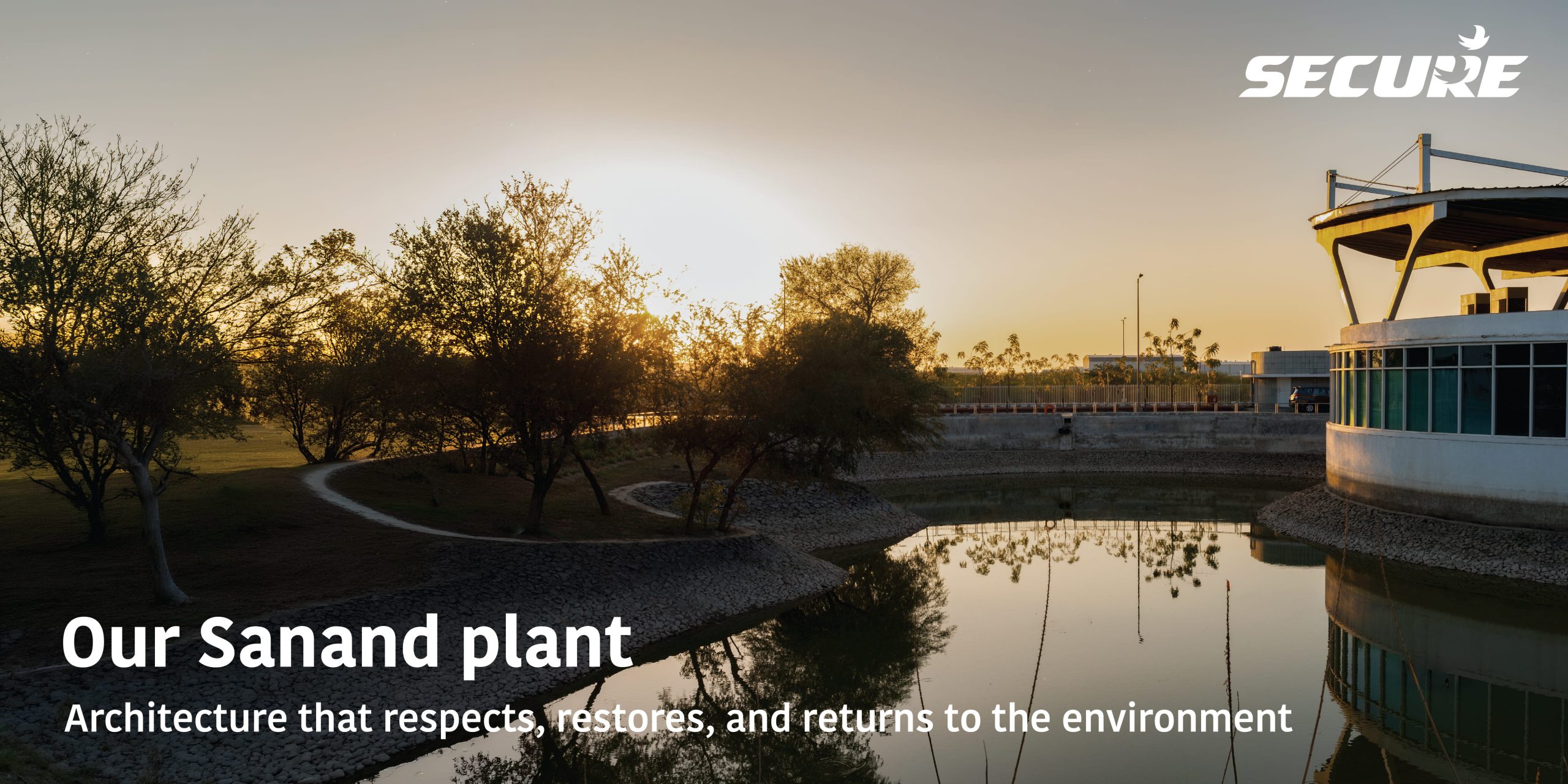
Every morning, the people who work at our Sanand factory walk through a landscape of native trees, past lakes that fill and recede with the seasons, to reach a building that was designed to work with the environment, not against it. That walk is not incidental. It is a reminder, at the start and end of every working day, of what this place was built to stand for.
Designed by our subsidiary architectural practice, Studio Saar, and inaugurated in 2018, the question we kept coming back to was simple: what does it mean to build a factory that is honest about the world it exists in? Green industrial design in India was still an aspiration at the time, not yet a standard. But for us, it was never a choice between being responsible and being productive. Caring for the environment was the foundation on which the whole project was built.
For most of the working day, the factory floor runs on sunlight alone. Triple-layered double-glazed windows bring in enough natural light to keep every workspace filled with daylight from morning to evening. The people inside spend their day connected to the sky outside, aware of the time and season, not sealed away under artificial light. Where extra light is needed, lux-sensor LED systems respond automatically, drawing power only when the sun asks for help. This significantly reduces dependence on artificial lighting and the energy it consumes.
The same thinking shaped how the building stays cool. Flexible spiral piping beneath the factory floor carries cool water that regulates the temperature at ground level, where people work. The water is cooled
and circulated again in a continuous, low-energy loop that requires far less energy than conventional air conditioning. Solar panels on the roof generate renewable energy to the maximum permissible capacity, steadily reducing the factorys carbon footprint with every hour of daylight. The building does not just use the resources around it. It gives some back.
Water tells the most honest story about how a building treats its surroundings. Here, rainwater harvested from the roof is directed through RCC hume pipes and trenches back into a natural on-site pond, returning what the rain brings rather than sending it away. Used water is separated and treated with care. Blackwater undergoes natural bacterial treatment before being reused for landscape irrigation and flushing. Grey water is processed through a sewage treatment plant and safely reused within the facility. Low-flow, auto-closing faucets throughout the building ensure that not a single litre is used beyond what is truly needed. In a region where communities know what it means to live without enough water, this is not just good design. It is a shared responsibility.
When we first looked at the land in Sanand, most factories around us were draining the natural water bodies and levelling the ground. We chose to do the opposite. The existing lakes were retained and incorporated into the design. Thousands of trees, plants, and shrubs native to this region were planted by our own employees, many of whom worked together to bring that land to life. Drought-tolerant species were chosen so the campus could survive the dry months without heavy irrigation, and welcome the monsoon without being
overwhelmed by it.
When the worst flooding this region had seen in years arrived in 2025, this was the only facility in the area that kept running. Every decision made years earlier, from the way the land was shaped to the way the water was managed, held. The environment had been cared for, and in return, it protected the people and the work within it.
Throughout construction, locally recycled materials and rapidly renewable wood were used wherever possible, and a structured waste management system made sure that nothing went to landfill. What is built responsibly should leave nothing behind carelessly.
On this World Environment Day, this stands as a reminder of what purposeful architecture can achieve when people decide to work with nature rather than against it. At Sanand, it is already happening every single day. And if this is what one building can do, the possibilities of what an entire industry could achieve are boundless.